PCOS, Gut Clues & Fertility: Claire's Case Study
Clinical Review by Dr. Angela Sinnett, L.Ac
She had PCOS, Crohn's disease, and one unexplained miscarriage behind her. The real root cause was hiding in her gut, not her ovaries, and finding it changed everything. Claire, 32, of Tucson, Arizona, had spent years managing two diagnoses that no specialist had ever connected to each other: polycystic ovary syndrome and Crohn's disease. When she lost a pregnancy at 8 weeks and then could not tolerate a single standard prenatal vitamin without triggering a flare, she assumed her body was simply working against itself. A 200+ biomarker panel found something more specific: severe gut dysbiosis, active mineral malabsorption, and a system wide inflammatory cytokine spike, none of which had anything to do with her ovaries and everything to do with why nothing she had tried was ever holding. Four months into a protocol built around her gut instead of a generic supplement checklist, she conceived, and in November 2025 she delivered a healthy baby boy.
Two Diagnoses, Filed in Two Different Charts
By the time Claire was 30, she had already been carrying a PCOS diagnosis for almost a decade. Irregular cycles, some months skipping entirely, had been explained to her early and never really revisited. Separately, in a different specialist's office, she had a second diagnosis on file: Crohn's disease, an inflammatory bowel condition that had put her through flares, restrictive eating windows, and a wary relationship with her own digestion since her early twenties. What nobody had ever done, in nearly ten years of appointments split across two specialties, was ask whether these two conditions might be talking to each other. That gap became impossible to ignore when Claire got pregnant for the first time, at 31, and lost the pregnancy at 8 weeks. The loss itself was devastating on its own terms. What made it worse was what happened afterward, when her OB, hoping to help her prepare for another attempt, put her on a standard prenatal vitamin. Within days, her gut reacted the way it reacted to almost nothing else in her life: a flare. Bloating, cramping, and digestive distress severe enough that she had to stop the vitamin entirely. She tried a second brand. Same result. A third, gentler formula. Still the same pattern. Every fertility forum and every friend who had been pregnant told her the same thing: you have to be on a prenatal, full stop, there is no version of trying again without one. Claire was left with a body that seemed to be actively working against the one thing every source told her was non negotiable. She had already been living the classic disciplined-but-under-informed pattern for years. Restrictive, carefully managed eating to keep her Crohn's calm. A cabinet of supplements chosen to support "hormone balance" in general terms, most of them purchased on the recommendation of a fertility forum rather than a lab result. Cycle tracking apps, basal temperature charts, ovulation predictor kits stacked on her nightstand. She was doing more than most women ever do for their fertility, and her body was still refusing to cooperate with the most basic recommended step. That contradiction, effort without result, is the exact wound that brings most women to Strategic Fertility in the first place, and Claire's version of it had an added layer: her body wasn't just failing to conceive, it was actively reacting against the standard advice for how to try, which made the whole process feel less like bad luck and more like her own biology working against her on purpose. By the time she reached out to Strategic Fertility, Claire had also started to notice a pattern her prior specialists had never named out loud: her worst Crohn's flares and her most erratic PCOS cycles seemed to cluster together, months apart from each other but never entirely independent. Nobody had ever put those two calendars side by side. That was the first real clue that her fertility struggle wasn't actually two unrelated conditions happening to occupy the same body.
The Seed and the Soil
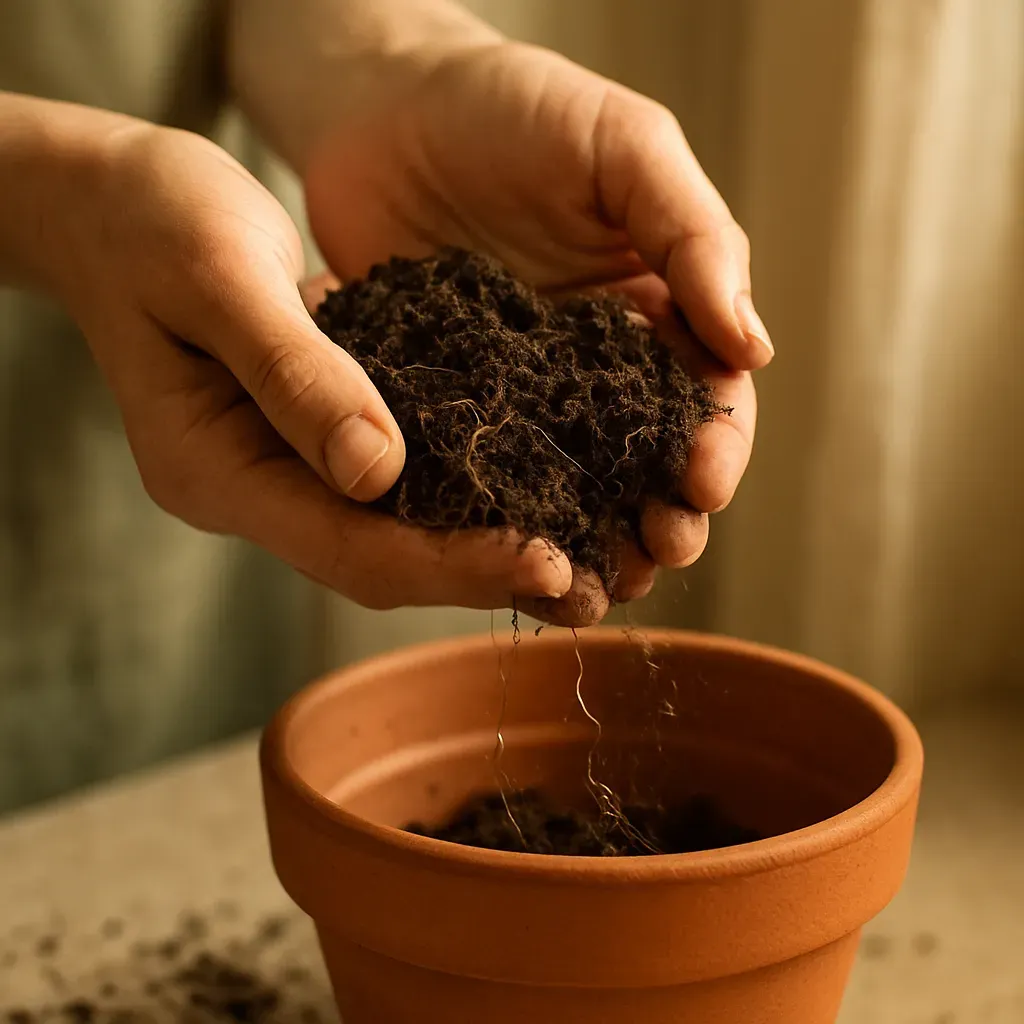
At Strategic Fertility, Dr. Angela Sinnett often explains the body's fertility potential using a simple agricultural comparison: the seed and the soil. The seed is the egg itself, its genetic material, its individual quality. Most conventional fertility care is entirely seed focused. Doctors count follicles, measure AMH, grade embryos, and evaluate the seed in isolation, as though a healthy seed dropped into any soil will grow the same way. The soil is everything else: the hormonal terrain, the inflammatory load, the nutrient availability, the gut environment the seed's supporting cells are built from. A genetically excellent seed planted in depleted, inflamed, mineral poor soil will struggle to take root and, if it does, will struggle to be sustained. A soil problem can look, from the outside, exactly like a seed problem: irregular cycles, a pregnancy that starts and then doesn't hold, a body that seems randomly uncooperative. Claire's case is one of the clearest soil stories in this practice's history, because her soil problem had an unusually direct, physical cause: a gut that was actively inflamed and actively malabsorbing the very nutrients her body needed most to build a hormone supply and sustain a pregnancy. PCOS was real. It affected her ovulatory rhythm. But PCOS alone does not explain a body that reacts to nearly every prenatal formula on the market and cannot seem to hold onto the minerals a standard diet should be providing. That required a different question: what is happening in the soil itself, not just in the seed everyone had already spent a decade examining. This is also why treating the PCOS diagnosis in isolation, the way Claire's prior care had always approached it, could only ever go so far. A protocol aimed purely at ovulation, without addressing the gut environment underneath it, would have been asking a compromised soil to support a seed on its own. Strategic Fertility's approach starts from the assumption that the seed is rarely the whole story, especially in a case where the seed itself, Claire's actual ovulatory pattern, had already been visible and diagnosed for years without ever leading anywhere.
What 200+ Biomarkers Uncovered
Standard fertility workups check a small handful of reproductive hormones and, in Claire's case, had already produced a PCOS diagnosis years earlier. What they had never checked was the gut and immune terrain underneath both of her existing diagnoses. Strategic Fertility's diagnostic panel screens over 200 biomarkers across 16 interconnected systems specifically because a body's fertility signal rarely comes from the reproductive system in isolation. For Claire, three findings stood out, each one traced directly back to her own case file, not assumed from a template: Severe gut dysbiosis. The bacterial ecosystem in Claire's digestive tract was significantly imbalanced, consistent with years of Crohn's related inflammation and the restrictive eating patterns she had adopted to manage it. This kind of dysbiosis does more than cause digestive discomfort. It disrupts the gut lining's ability to properly absorb the raw materials the body needs to manufacture hormones and sustain a pregnancy. Active mineral malabsorption. Directly downstream of the dysbiosis, Claire's biomarkers showed she was not absorbing key minerals at anywhere near the rate her diet alone would predict. This finding reframed her prenatal vitamin reactions entirely. It was never that her body was rejecting nutrition out of nowhere. An inflamed gut lining was reacting to the fillers, binders, and high-dose synthetic forms packed into most standard prenatal formulas, the same formulas built for a digestive system that isn't already compromised. Systemic inflammatory cytokine spikes. Claire's bloodwork showed elevated markers of whole-body inflammation, consistent with an immune system already working overtime to manage her Crohn's disease and now carrying an additional load that made a stable hormonal and uterine environment harder to establish and, in her prior pregnancy, harder to sustain. None of these three findings would have shown up on the hormone panel that had already diagnosed her PCOS. They lived in a different part of her biology entirely, one that a reproductive-only workup was never built to see. If you've been told your labs are "normal" but something still isn't adding up, you don't need another guess, you need the full picture. Dr. Angela Sinnett walks through exactly how this kind of root cause gets found in a free training you can watch right now: https://strategicfertility.com/o-23
The Four Step Protocol
Claire's protocol was built specifically around the gut and immune findings above, not around her PCOS diagnosis in isolation, because her own biomarkers pointed there first. Step one: customized, low fiber, tolerable gut restoration. Rather than the high fiber, high raw vegetable approach usually recommended for gut health, which would have aggravated her already inflamed Crohn's terrain, Claire's plan used a gentler, lower fiber restoration approach designed specifically to calm and rebuild an already compromised gut lining without triggering a flare. Step two: elemental micronutrient supplementation. Instead of standard prenatal capsules built from forms and fillers her gut had already proven it could not tolerate, Claire was moved onto elemental forms of the specific minerals her labs showed she was malabsorbing, delivered in a way designed to bypass the digestive friction that had caused every previous formula to fail. Step three: anti-inflammatory mucosal repair. Targeted support aimed directly at calming the inflamed gut lining itself, addressing the physical barrier issue that was driving both the malabsorption and a share of her systemic inflammatory load. Step four: cycle and pregnancy monitoring built around her actual findings. As her gut environment and inflammatory markers began to shift, her protocol was adjusted in step with her own retested biomarkers rather than left on a fixed timeline, so that the plan kept following her body instead of a generic schedule. Roughly six weeks in, Claire noticed the first sign that something had genuinely changed: for the first time in years, she could tolerate a micronutrient regimen daily without a flare, and her digestive symptoms, the ones she had quietly assumed were just her baseline, began to ease. That was the first sign, and it mattered on its own, regardless of what came next. What came next arrived in a season Claire had stopped letting herself plan for. Four months into her custom protocol, she conceived. This time, the pregnancy held. In November 2025, Claire delivered a healthy baby boy. A note on what this does and does not mean: Claire's root causes, an inflamed gut lining, specific mineral malabsorption, and a systemic inflammatory load layered on top of Crohn's disease, were specific to her own biology and her own case file. Another woman with a PCOS diagnosis, even one with her own history of digestive trouble, could have a completely different underlying pattern once her own 200+ biomarkers are actually reviewed. Nothing about Claire's protocol is a template to copy. It is an example of what individualized testing can find when it is allowed to look past a single existing diagnosis.
Five Diagnostic Questions to Ask Before Another Procedure
If Claire's story sounds familiar, here are five questions worth asking before agreeing to another round of the same approach that hasn't worked yet:
1. Has anyone actually tested my gut and immune markers, or has every workup stayed focused on my reproductive hormones alone?
2. If I react badly to standard prenatal vitamins or supplements, has that reaction itself ever been investigated, or was I just told to push through it?
3. Do I have more than one diagnosis on file, and has anyone ever asked whether they might be connected to each other?
4. Am I being offered a next procedure, or a next explanation? Those are not the same thing. 5. Has anything in my plan actually changed based on my own retested biomarkers, or am I following the same fixed timeline regardless of what my body is showing?
Frequently Asked Questions
Can PCOS and Crohn's disease both affect fertility at the same time?
Yes. PCOS can disrupt ovulation directly, while Crohn's disease can drive gut inflammation and nutrient malabsorption that affect the hormonal and uterine environment a pregnancy needs to establish and hold. The two conditions are frequently managed by separate specialists and rarely evaluated together, even though they can compound each other.
Why would someone react badly to standard prenatal vitamins?
An inflamed or compromised gut lining can react to the fillers, binders, and high-dose synthetic nutrient forms found in many standard prenatal formulas. This is different from simply disliking a supplement. It can be a sign of an underlying gut or absorption issue worth investigating rather than working around.
What does gut dysbiosis have to do with getting pregnant?
An imbalanced gut microbiome can impair the body's ability to absorb the minerals and nutrients used to build hormones and sustain a pregnancy, and it can contribute to the kind of systemic inflammation that makes conception and early pregnancy harder to sustain.
Is elemental micronutrient supplementation different from a regular prenatal vitamin?
Elemental forms are designed to be more readily absorbed with less digestive friction, which can matter significantly for someone whose gut lining is already compromised and reacts poorly to standard formulations.
How is this different from what a standard OB or fertility clinic already tests?
Most standard workups check a small number of reproductive hormones. Strategic Fertility's panel screens over 200 biomarkers across 16 interconnected systems, including gut, immune, and nutrient absorption markers that a reproductive-only workup is not built to evaluate. Claire's root cause was never going to show up on a hormone panel alone. If you're ready to find out what yours actually is, book a $37 Discovery Call and get a real answer instead of another guess.